
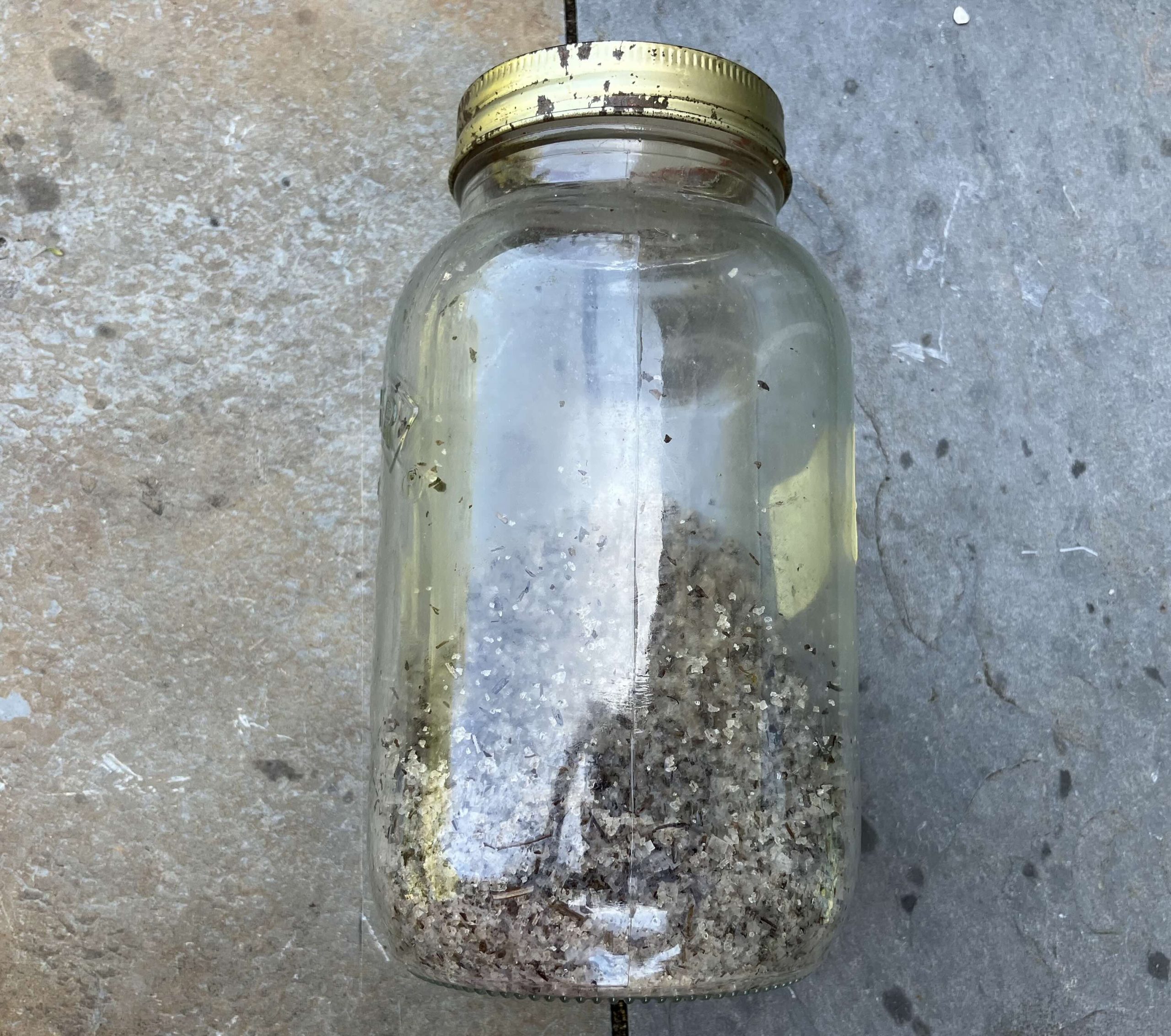
Salt on the Solway
In the post on the Floriston smugglers, I told how, in 1822, Revenue men confronted five presumed smugglers carrying packages they thought to be Scottish salt.
But of course, extracting salt from sea water was an occupation carried out in coastal areas around the whole of the British Isles, including Cumbria.
Records in Carlisle Archives include someone’s ‘Remembrances at Longcroft,’ written in 1589.
Longcroft
Longcroft, if you don’t know the area, is a little hamlet based around a farm and house of that name and – if Wikipedia is correct – today comprises a total of just five houses.
It is, as someone else puts it, ‘hidden between Kirkbride and Anthorn’, and was bigger in the past: there are 12 distinct entries at Longcroft on the 1851 census, for instance, plus a 13th that was uninhabited at that time.
Longcroft Farm itself is Grade II Listed, and Historic England has a photo that shows an archetypal Cumbrian farmhouse, ‘with painted flush quoins,’ dating from the late 18th/early 19th centuries.
A comment on the Listing says:
‘In 1811 the Farm was called Longcroft Farm and was occupied by William and Mary Clark. Following their deaths the farm was bequeathed to Daniel Clark the eldest son who was a Grocer and plyed his business in Kirkbride.’
My old notes for the place say that the farm seems to have been let in 1837 to James Atkinson. In 1851, he was farming 280 acres there (likely including a lot of common land and ‘moss’).
Another family who were for sure at Longcroft were the Pattinsons, who in 1841 were ‘next door’ to James Atkinson, with head of the family John Pattinson described as a farmer.
The Pattinson family had had ‘a house and garth’ there since at least 1756.
The present farm is presumably a relatively recent rebuild.
A 1677/78 tenants list has ten names on it, with five of them living in cottages.
Salt on the Solway
Going back to the topic of salt on the Solway (!): in 1589, there were two ‘salt coats’:
‘or two little houses where they make salt, one of them being in the occupation of John Woolson which standeth upon the Earl’s land, and the other upon a freeholder’s land.’
The report’s only interest was in revenue for ‘the Earl’ (whoever that was at the time):
‘Woolson sayeth when he keepeth the coates working that year he payeth to the Bailiff of Burgh 12 perks of salt it being worth about 12/-.’
Woolson also paid about 13s 4d a year for the turf and peat he used to make the salt. While the freeholder only had to pay for the turf and peat (which was from ‘the lord’s mosses’). This unnamed person also paid ‘about 13s 4d’ a year.
Salt on the Solway also came from four salt coats ‘on the other side of the water,’ out of the barony of Burgh. But they still paid approximately 12s to 13s 4d for turf and peat from the mosses.