
Floriston smugglers
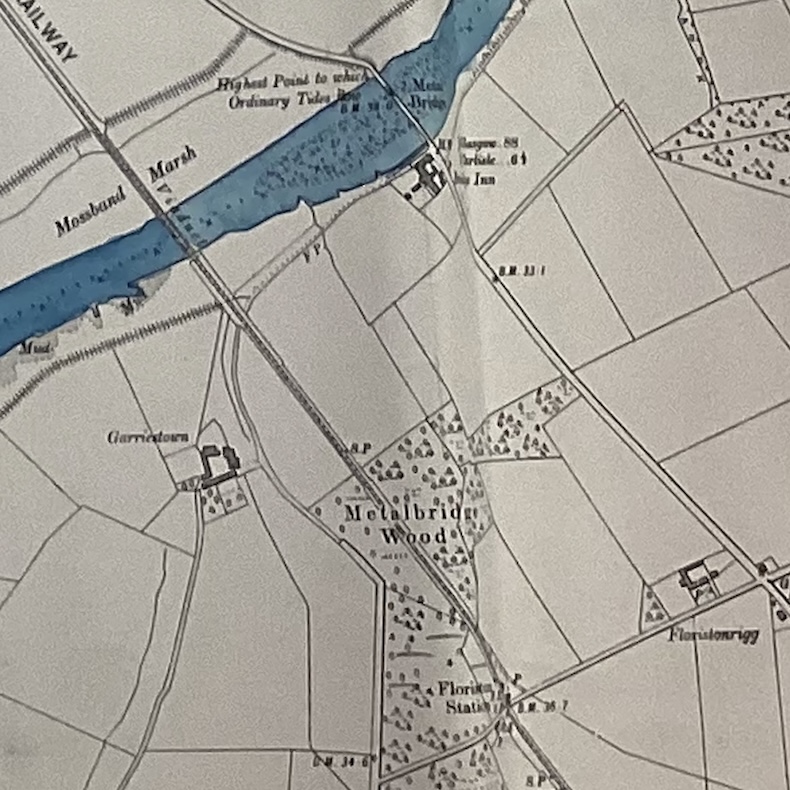
Floriston today is (in railway circles) famous for its level crossing, which is part of the main West Coast line to/from Scotland.
Apparently, it used to have a railway station, till 1950.
Look at a map, and it’s easy to see why they closed it. And harder to see why it was ever there in the first place, as there are only a scattering of farms and other buildings spread across the area.
If you know the train line, it’s not far short – to the south – of where it crosses the river Esk where it leads out into the Solway, which leads out into the sea.
And not far north of the bridge over the Esk lies Scotland.
Back in 1822, 25 years before the then Caledonian Railway opened, Floriston was famous for something else.
Smugglers.
And if you have ever seen smuggling portrayed as a victimless crime, affecting only the coffers of the government, the Floriston smugglers are a reminder that such men were not adverse to using violence when challenged.
Indeed, you can’t help admiring the courage of those who went out at night, in remote locations far from back-up, to catch them – not knowing how many offenders they would be up against, or how they would retaliate.
William Harding
1822. January 26. Westmorland Gazette.
‘Lieutenant John Russell, of the Preventive Water-Guard-boat, belonging to the port of Carlisle, left Bowness, in the company of two men under his command, named Samuel Skelly (or Skealey) and John Hartley, and proceeded up the Solway Frith as far as Floriston Bridge, in order to prevent smuggling.’
It is, as the story tells us at the start, a melancholy occurrence’.
The Revenue men confronted five presumed smugglers carrying packages they thought to be Scottish salt.
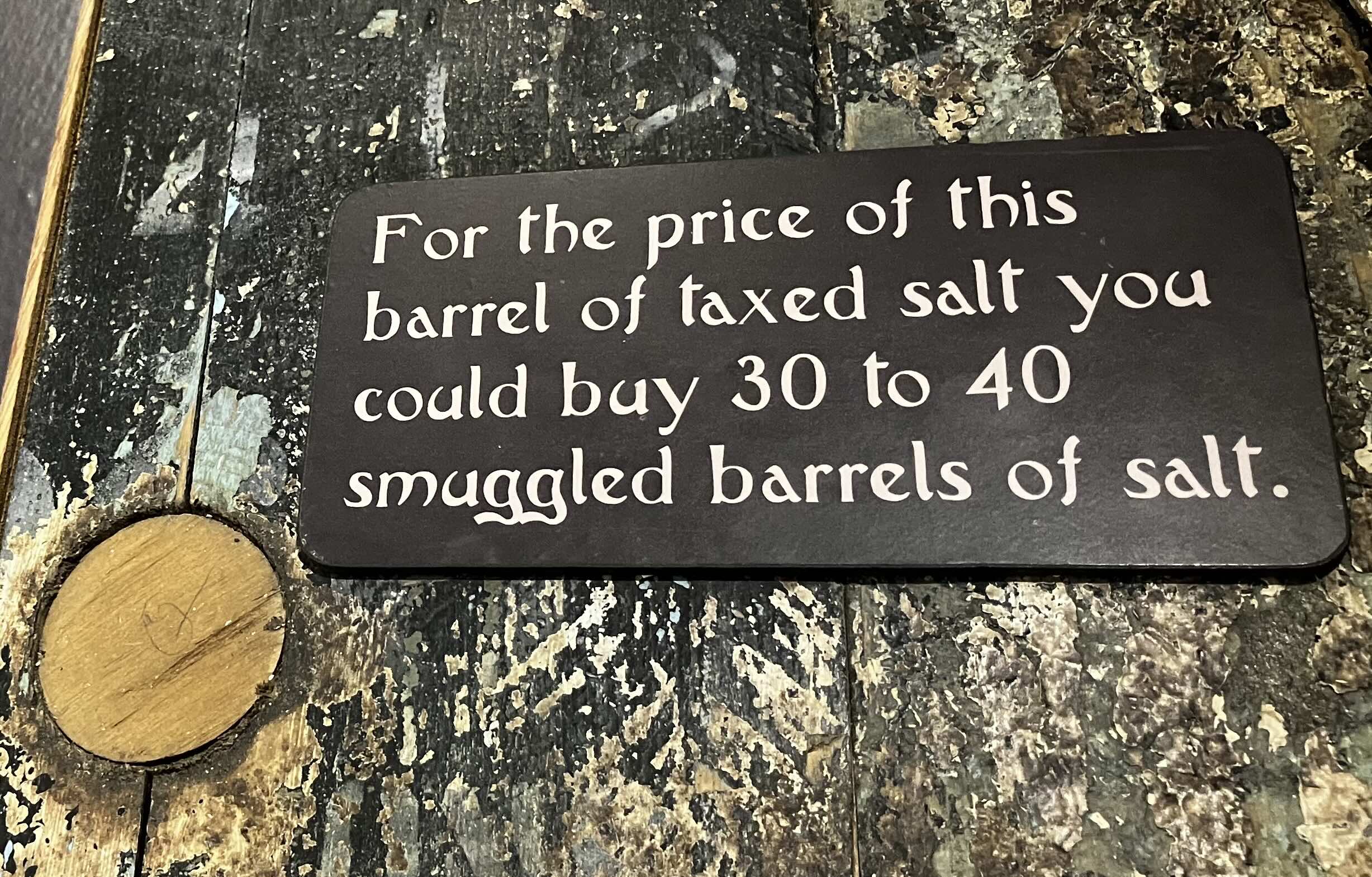
In 1822, salt was still being taxed. There were calls in Parliament in June that year for the government to repeal it. Before then, it was well worth smugglers’ while to run salt as contraband.
When ordered to hand over the barrels, the five men attacked the officers with sticks. Russell and Skelly /Skealey fired their pistols in self-defence, and a man called William Harding, of Warwick Bridge, was shot through the left thigh.
The ball hit his femoral artery and he died pretty quickly.
The inquest jury (despite the advice of Mr Lowry the coroner) found a verdict of murder against Russell and Skelly.
Harding left a widow and four children.
The jury at Carlisle Assizes acquitted Russell and Skelly of murder two months later, ‘without hesitation’. The judge observed they had ‘done their duty, and no more than their duty’.
But while saved by the courts, the matter wasn’t forgotten.
George Irving
1822 August 19. A report in the Morning Herald (London) is headed:
The King v George Irving
The George Irving case again involved Lieutenant Russell. He and four men had been watching Floriston Bridge on the night of June 28, from an old outhouse.
Irving, intoxicated, had burst in and refused the advice to go home.
In fact, George Irving stripped off as if to fight, grabbed Russell by the collar, and said: “You’re the –– who the man.”
In the end, the officers restrained Irving and put him into a back building. Only for him to get out through the roof and attack them again.
This time, firmly secured, he was taken under escort to Carlisle.
In court, the defence case was that ‘they started it’ by trying to turn Irving out the barn.
It didn’t wash, as the jury found Irving guilty of assaulting Russell (though not of obstructing him in the discharge of his duty).
Irving was jailed for six weeks.
The Evening Mail report says Irving gave another officer, James Thomas, a black eye; said he’d drunk ‘two noggins of whisky’ and ‘offered to beat the whole of us, two at a time’.
More Floriston smugglers
1822 August 19. Morning Herald (London)
The King v Coulter.
This case was from April 19, when a ‘coast-waiter’ called Edward Foster had been on duty near Floriston bridge when he saw a woman crossing the bridge in a cart with a large bundle he suspected to be smuggled whisky.
On seeing the officer, she left the cart to cross the marshes.
He demanded to know what she had. At which, her husband came up behind him brandishing a bill-hook and threatening to ‘cleave open his skull’ if he touched her.
Foster stepped back and took out his pistol, leading to a stand-off, during which the woman escaped across the moors. With her bundle.
Edward Foster had been a coast-waiter for ten months, his previous grocery business having failed.
The defence case was that Mrs Coulter was carrying a quilt. As ‘all the family’ could verify.
But she wasn’t the one on trial, nor was the charge smuggling.
Coulter (no first name given) was found guilty and sentenced to two months in jail, with hard labour.
The Evening Mail says the defendant was called Coulthard.
A busy year
1822 August 19. Morning Herald (London):
The King v Gibson.
Before a special jury
This time, it was a case from February 11, when excise office Joseph Gilchrist and constable Francis Carruthers had been out on the watch for smugglers.
About 4:30am, they saw a party of smugglers, headed by Gibson and a man named Jackson, with three other men and four women, all carrying bundles.
They spotted the officers.
Gibson and Jackson put their bundles down, the others picked them up and made off with them. Leaving the pair flourishing sticks and threatening to give the officers a beating if they came any closer.
Gilchrist ‘drew his cutlass and pistols’ (how many hands did he have?!).
Gibson then called him by name, and offered him: ‘the best in Springfield, if you’ll not be severe” and pulled a bottle of whisky from his pocket, offering it to Gilchrist to drink.
Gilchrist refused, and Gibson, seeing he was resolute, said: “I’d rather lose my life than the stuff” and aimed several blows at the officer.
Gilchrist fended off most of them, but was hit on the arm.
The smugglers’ large dog then grabbed his leg, and he had to ‘sabre it’ to extricate himself.
Gibson was still trying to hit him, and stunned him with a blow to the head.
In defending himself, Gilchrist injured Gibson across the arm and fingers with his cutlass.
Gibson finally handed over his stick after being told he’d ‘suffer for it at a future day’.
Francis Carruthers corroborated the story and described his own treatment, but the article doesn’t say what that was.
Gibson wasn’t called by his brief to give evidence, the Lord Chief Justice summed up the case.
And the jury found Gibson guilty. (And there it ends).
The Evening Mail says he was William Gibson, and the other man who hung back was William Jackson.
The dog ran off after biting Joseph Gilchrist and being struck twice with his cutlass.
Mr Brougham, for Gibson, said he had no means of calling any witnesses, and couldn’t expect the jury to do anything but find Gibson guilty.
Gibson was ordered to appear for judgment in the Court of the King’s Bench.
Gibson spent six months in jail, awaiting sentencing. Before being given four months’ jail as the sentence, plus a good behaviour pledge in the sum of £40, and two £20 sureties.
- Footnote: the image is from the National Maritime Museum in Falmouth, Cornwall. It relates to the 18th Century, so the price comparison may not match that of 1822.
- The Salt Tax was finally repealed in 1825.